Child Development Stages in the UK: Insights From Early Years Educators
Published on: 5 May 2025
Understanding how children grow and learn is important for parents. In the UK, child development stages are well defined to help you know what to expect from birth until school age. Knowing these stages helps you support your child’s learning, social skills and wellbeing during every early years stage.
You’ll see how babies change quickly from rolling over to speaking their first words and from playing alone to making friends. Development comes fast in the early years, so it’s useful to know what to expect when and how you as a parent can support your child’s holistic development.
Learning more about these stages will help you spot milestones and know when to seek extra help if needed. Here, the child development experts at St Martin’s take you through a comprehensive guide on child development stages.
Understanding child development stages in the UK
Child development in the UK follows defined stages from birth to five years. Recognising the key milestones helps you understand what to expect as young children grow, learn and develop.
Key milestones across early years
In the early years, children move through major changes in physical, social and language skills. By the end of age one, you may notice improvements in crawling, standing, responding to sounds and making simple gestures. Between ages two and three, speech grows rapidly, and many children learn to form short sentences and follow instructions.
At ages three to four, most children can jump, climb, ask questions and play with other children. By age five, they’ll have developed basic reading and counting skills and learnt how to carry out some activities independently, such as dressing themselves.
Developmental stages and age ranges
The main stages of development from birth to five years include:
| Age range | Typical development features |
| 0-1 years | Motor skills (lifting head, sitting, crawling), recognising faces, beginning to communicate. |
| 1-2 years | Walking, basic words, copying behaviours, playing simple games. |
| 2-3 years | Speaking short phrases, following routines, showing affection, starting potty training. |
| 3-4 years | Asking questions, making friends, using basic logic, climbing and running confidently. |
| 4-5 years | Reading and writing, counting, longer conversations, beginner problem-solving skills. |
Milestones in each age range can change quickly, so regular checks with your health visitor can help ensure healthy growth.
The role of early years educators
Our early years educators help children reach their best possible development during the first five years. They observe children’s growth, keep records and support learning.
Educators plan activities to match each child’s needs, from group play to early writing and reading tasks. They also work closely with families and health visitors to watch for any delays or concerns.
You can expect them to encourage language, physical skills and emotional development. Early years settings play an important role in building each child’s confidence and preparing them for school.
Major domains of early childhood development
In early childhood, development can be grouped into key areas. Each area is key to your child’s overall progress and affects how children grow, learn and interact with others.
Physical development and motor skills
Physical development is about the ways your child’s body grows and moves. This includes both gross motor skills, such as walking, running and climbing, and fine motor skills like holding a pencil, cutting with scissors or turning pages in a book.
Physical skills are closely linked to independence. For example, learning to feed themselves or dress without help are clear milestones. Regular chances for movement, such as playing outside, help children strengthen their muscles and coordination.
Physical health and development are also monitored by health professionals and early years practitioners. Growth patterns are expected to follow common milestones, though each child may progress at their own pace.
Language and communication milestones
Language development is a major focus in the early years. Young children start by recognising sounds, then move to babbling, saying single words and gradually build short sentences. Communication skills also include gestures and facial expressions.
You should watch for clear signs of progress, such as following simple directions, naming everyday objects, or talking with familiar people. Reading stories, singing songs and friendly conversation all encourage language growth.
Early communication sets the foundation for social skills and later learning. Children with strong language abilities find it easier to express needs and feelings, ask questions and make friends.
Cognitive and emotional growth
Cognitive development covers thinking, understanding, memory and problem-solving. Children become curious, ask questions and explore how things work. Play helps them develop skills like sorting, matching and counting.
Emotional development means understanding feelings and learning to manage them. This includes recognising emotions such as happiness, sadness or anger, and starting to control impulses or frustrations with guidance.
Routine and positive support help children feel secure and confident. They learn to cope with changes, follow simple routines, and gain self-esteem. These areas are important for starting school and building readiness for future learning.
Social skills and interaction
Social skills develop as children begin to interact with adults and other children. Sharing, taking turns, and understanding rules are early examples. These experiences help children build friendships, work together and resolve simple conflicts.
Children become more aware of others’ feelings and start to show empathy through acts like comforting a friend who is upset. Group play, pairing with peers and participating in group activities all support social learning.
Support from adults is key at this stage, as children often need help to manage disagreements or understand social cues. Early years settings use games, group tasks and role play to encourage positive social interaction.
Detailed age-based developmental expectations
Children grow and develop skills at different rates. Each age band includes social, physical, communication and cognitive milestones that help guide your expectations.
Infants: 0-6 months and 7-9 months
From birth to 6 months, babies develop strong bonds with parents and caregivers. You will notice your baby starting to smile, follow faces and make cooing sounds. Neck and head control improve, and they begin to grasp small objects.
Between 7 and 9 months, your baby becomes more mobile. Sitting without support, rolling over and bouncing when held upright are common. Communication skills show in babbling, copying sounds and recognising familiar voices. They may also use hands and fingers more, transferring toys from one hand to the other.
Babies: 9-12 months and 1-2 years
From 9 to 12 months, crawling and standing with help become main activities. Your child might pull up to stand and even take a few steps with furniture support. Babbling becomes clearer, and first words like “mama” or “dada” often emerge.
Between 1 and 2 years, your toddler gains confidence in walking and moves onto running short distances. More complex play starts, such as stacking blocks or pushing toys. Vocabulary grows and you may hear up to 50 words by age two, with simple phrases like “all gone” or “more juice.” Social skills include waving, clapping and showing affection.
Toddlers: 2-3 years
At 2-3 years old, children show clear leaps in independence and movement. Activities like climbing, jumping and kicking a ball become routine. You will see sentences forming with two or three words together. Curiosity grows, so questions like “what’s that?” are common.
Toilet training often starts during this time. Social play, sharing with peers and copying adult actions all become important learning points. They begin to understand rules but might still test boundaries. Simple puzzles and group songs are helpful for learning and development.
Preschoolers: 3-4 years and 4-5 years
From 3 to 4 years, your child’s language skills expand quickly. They ask longer questions, tell simple stories, and are better understood by strangers. Motor skills allow drawing simple pictures and using scissors safely. Friendships start forming, with early turn-taking and sharing during group play.
Between ages 4 and 5, physical abilities grow stronger. Children can catch balls, hop on one foot and draw people with a head, arms, and legs. Emotional awareness increases. They talk about feelings, follow routines and show more self-control. Independence in dressing and eating also improves.
Supporting healthy development at each stage
Children’s growth depends on daily experiences, well-designed spaces, and meaningful activities that match their stage of development. Nurture healthy habits by focusing on movement, practical skills, language and encouraging choices.
Creating age-appropriate environments
Both parents and educators play a key role in setting up safe, inspiring environments for children. For babies, soft mats and tummy time help build strength and coordination. Toddlers need access to a variety of materials, like stacking blocks and threading beads, to develop fine motor skills.
Children should be offered a range of props and everyday objects to encourage exploring new textures, shapes and sounds. Low shelves and labelled storage make it easy for children to select and tidy up toys, supporting independence.
Outdoor spaces offer opportunities for running, climbing and experimenting with a range of movements. Providing natural items, like sticks, leaves and water, can stimulate curiosity and build problem-solving skills. Inside or outside, we should give children time to explore at their own pace.
Promoting motor and ball skills
Fine and gross motor skills help children move confidently and complete daily tasks. Setting aside time for daily physical activities, such as running, balancing and jumping, help them build these skills. Ball games can start simple, like rolling a ball back and forth, and can progress to catching, throwing or kicking.
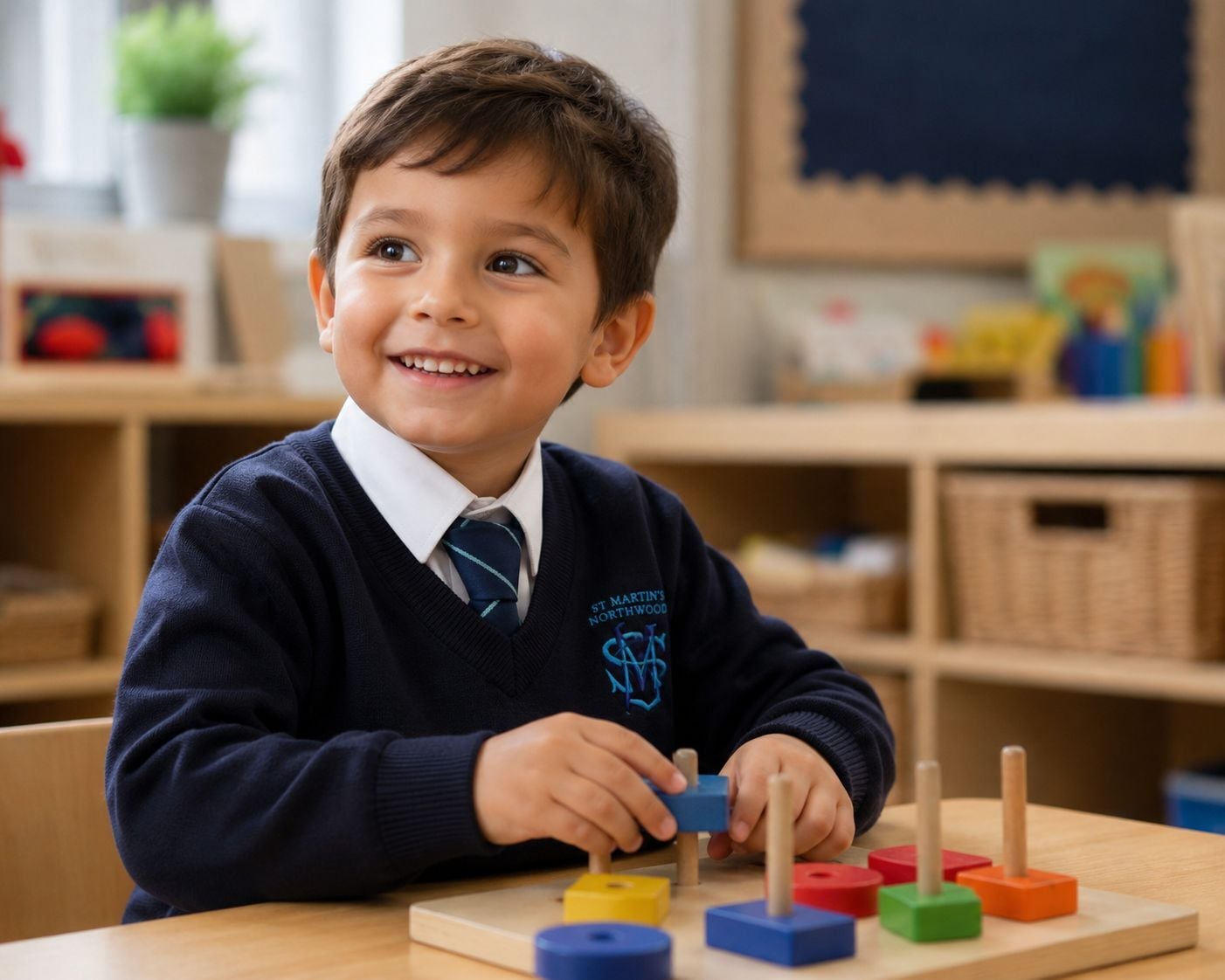
Using a mix of small and large balls challenges coordination and timing. Threading beads strengthens hand muscles, which supports writing and self-care tasks. Puzzles, stacking cups or tools like spoons and paintbrushes help them practise gripping and control.
Encourage children to try new skills by breaking tasks into small steps. Celebrate their progress, but let them repeat actions often so they can build confidence. Physical play is linked to healthy development and should be a daily priority in early years settings.
Enhancing communication and language skills
Strong language skills help children express needs, make friends and understand their world. That’s why it’s important to use clear, simple sentences with young children, and model a range of vocabulary throughout the day. For older children, we can start to use more complex sentences as their understanding grows.
You can read picture books and talk about the characters, settings and events together. Allow your child to choose and share favourite books repeatedly. Singing, rhyming and listening to stories also build listening and memory skills.
At home, you should encourage conversation by asking open questions and giving children time to answer. Expand on their comments with richer language, describing what they see and do. Offer many opportunities for your children to talk, listen and be heard in a supportive environment.
Emotional wellbeing and social relationships
Children develop social skills, handle a range of emotions and learn to form healthy attachments in their early years. Paying attention to their emotional wellbeing and needs helps build positive relationships and creates a secure foundation for future growth.
Supporting emotional wellbeing in early years
Supporting mental health in young children means noticing their feelings and helping them express themselves in healthy ways. Listening to your child and showing empathy teaches them it is okay to share both happy and difficult emotions. Being patient when children experience frustration or sadness encourages them to talk about their problems rather than hide them.
Children benefit from:
- recognising and labelling emotions, such as happy, sad or scared
- learning how to manage strong feelings when they rise up
- observing you use calm facial expressions and gentle words.
Early years settings in the UK like St Martin’s encourage play-based learning and social interactions with peers. These activities support emotional wellbeing by developing confidence, building friendships and helping children adapt to new situations.
Managing separation anxiety and attachment
Separation anxiety is normal for young children, especially when they begin nursery or school. Providing a consistent routine can ease these worries and help your child feel secure.
You can help by:
- creating a goodbye ritual, like a special wave or phrase
- staying calm and positive at drop-off time
- returning when you say you will.
Help your child talk about their feelings and reassure them it is normal to miss loved ones. Staff at elite nurseries and schools like St Martins are trained to support emotional wellbeing and help children settle.
Nurturing a secure base for children
A secure base means your child trusts that you or another caring adult will be there when needed. This trust lets them explore, play, and learn with confidence. You nurture this by being responsive; respond quickly when they need comfort, and show them you notice their feelings.
Children need:
- regular hugs and positive attention
- encouragement to try new things, but support when they feel unsure
- a clear, predictable daily routine.
Children who have a secure base are more likely to form strong social relationships and better handle big emotions. Practitioners in early years settings also help by responding consistently to individual needs and creating a warm, welcoming environment.
Inclusion, culture, and individual differences
Each child is unique, with their own strengths, needs and background. Creating a welcoming setting means recognising these differences, valuing every culture and making sure children access many learning opportunities.
Recognising and respecting individual needs
Children have varied ways of learning, and their needs can be physical, emotional or related to language development. Some children may require extra support with communication or mobility, while others may need help feeling confident in group settings. It is essential to notice these differences early.
Observing children during routines like tidy-up time or personal hygiene tasks gives you insight into their capabilities and preferred ways of interacting. If a child struggles, you can adapt activities or provide support so they don’t feel excluded. Small changes, such as using clear instructions or offering visual aids, help all children join in.
Families play a key role. Listening to parents about their child’s interests or areas of need gives you vital information. Respecting each child’s pace means allowing periods of time for practice and growth, without rushing development. Approaches like this support every individual child and set the tone for inclusion in your setting.
Valuing a range of cultures and backgrounds
Children join nursery and school settings with a variety of home cultures, languages and traditions, and welcoming this diversity is important. A setting that reflects a wide range of backgrounds helps each child feel seen and understood.
Our school celebrates diversity in a range of ways. With activities that share stories, songs and foods from different cultures, we allow children to appreciate their own identity while learning about others.
Daily routines can also reflect cultural diversity. For example, we can incorporate greetings, songs and even personal hygiene practices from various cultures. By giving value to varied ways of living, we send a clear message that everyone belongs.
Ensuring a wide range of experiences
A rich learning environment isn’t only about what is taught but also about the range of experiences offered. Children should be able to explore new ideas, try different materials, and take part in group and solo tasks. Offering variety ensures that no single child falls behind.
We can rotate materials, change groupings, and provide both active and quiet activities. Plan for children to work together during tidy-up time or share snacks, which supports teamwork and understanding.
Periods of time throughout the day, such as free play or focused sessions, allow children to choose activities that interest them. This balance of structure and freedom gives every child a chance to take part.
Interested in more about child development? Learn more about how the child’s brain develops between ages 0 and 6.