9 Key Benefits of Play-Based Learning In The Early Years
Published on: 17 November 2025
Play-based learning is key to early years learning, because children naturally learn through curiosity, movement and imagination. Learning through play builds on these instincts, turning everyday moments into meaningful opportunities for growth.
Both unstructured and purposeful play shape early development and support learning across every area of a child’s life.
Play-based learning equips children with essential skills like communication and language, problem-solving and emotional understanding. It can often be perceived as just a fun pastime for children, but it offers so much more than that. It’s a method of nurturing the whole child – socially, physically, emotionally, and cognitively.
Here, we’ll cover the benefits of play-based learning in early years education and how a play-based curriculum fits within the early years foundation stage (EYFS) framework.
1. Enhances cognitive development through exploration and problem-solving
Children build strong thinking skills when they engage in play that involves exploration and problem-solving. Through play-based learning, children test ideas, make predictions and see the results of their actions. This process strengthens memory, attention and reasoning abilities.
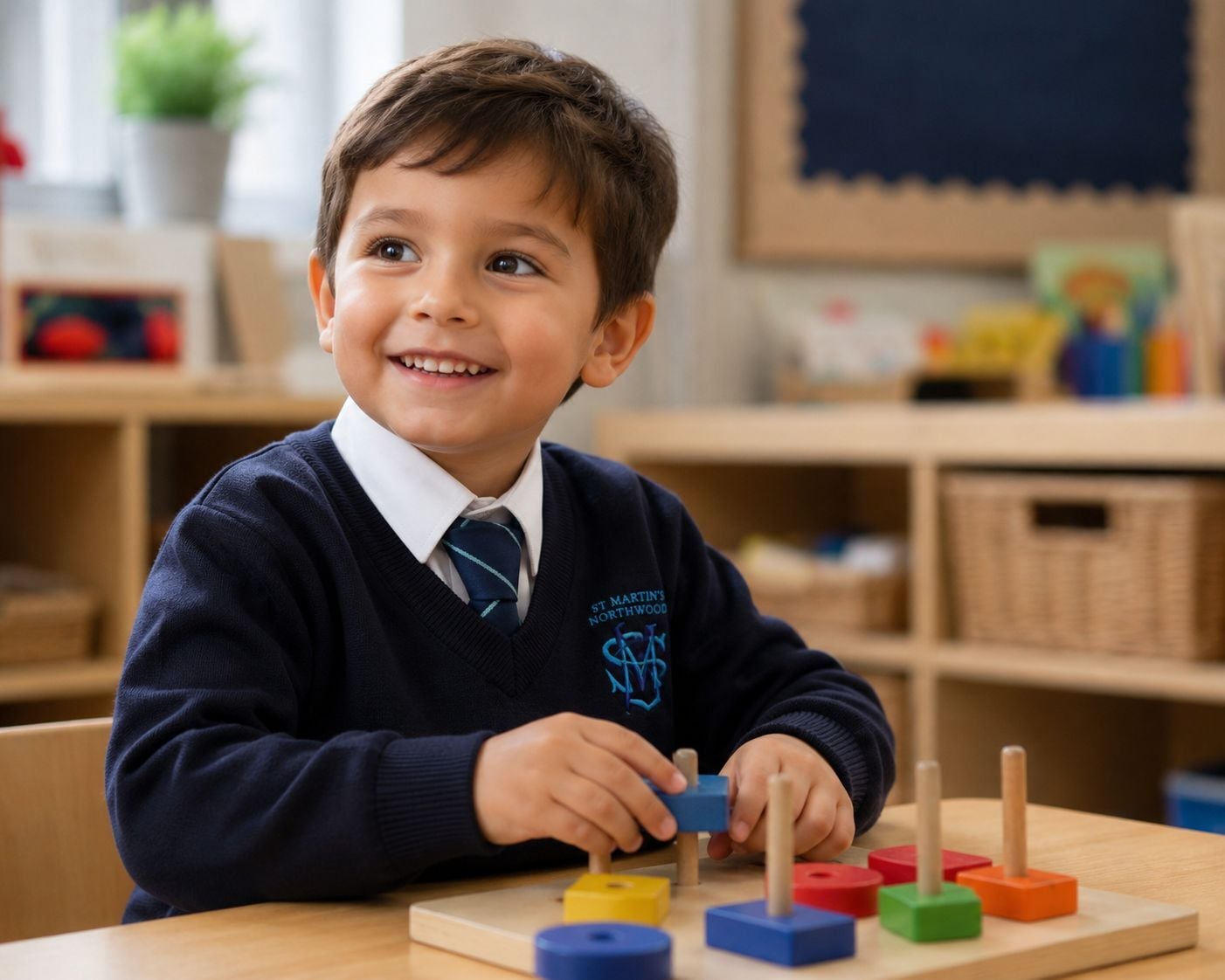
When children take part in imaginative or guided play, they learn to think critically and adapt to new challenges. Activities such as building blocks, puzzles or pretend play games encourage them to plan, experiment, and adjust their strategies. These experiences support logical thinking and decision-making.
Play-based learning also promotes curiosity and motivation to learn. By exploring and experimenting, children gain confidence in their ability to find solutions. These experiences help children develop creativity and flexible thinking.
At St Martin’s, we use open-ended play materials and outdoor play to encourage exploration. This active engagement allows children to connect ideas, solve problems and build essential cognitive skills through meaningful experiences.
2. Supports language development by encouraging communication and vocabulary use
Play experiences that invite children to talk, listen and share ideas are key to language development. Through play, children practise using new words and learn how to express their thoughts clearly.
During pretend play, children often take on roles and use language that fits different situations. This helps them expand their vocabulary and understand how words work in context. Play-based learning also promotes narrative skills as children describe actions or tell stories about what they are doing.
Our qualified nursery practitioners at St Martin’s encourage communication by joining in conversations, asking open-ended questions and modelling correct speech. Implementing activities including storytelling, pretend play and word games give our pupils regular chances to practise speaking and listening.
A language-rich learning environment supports this growth further. By including visual aids, books and interactive displays, we encourage children to engage more deeply with words and communication. Through these everyday interactions, play becomes a natural and effective way for children to develop strong language and vocabulary skills.
3. Promotes social skills via cooperative and imaginative play
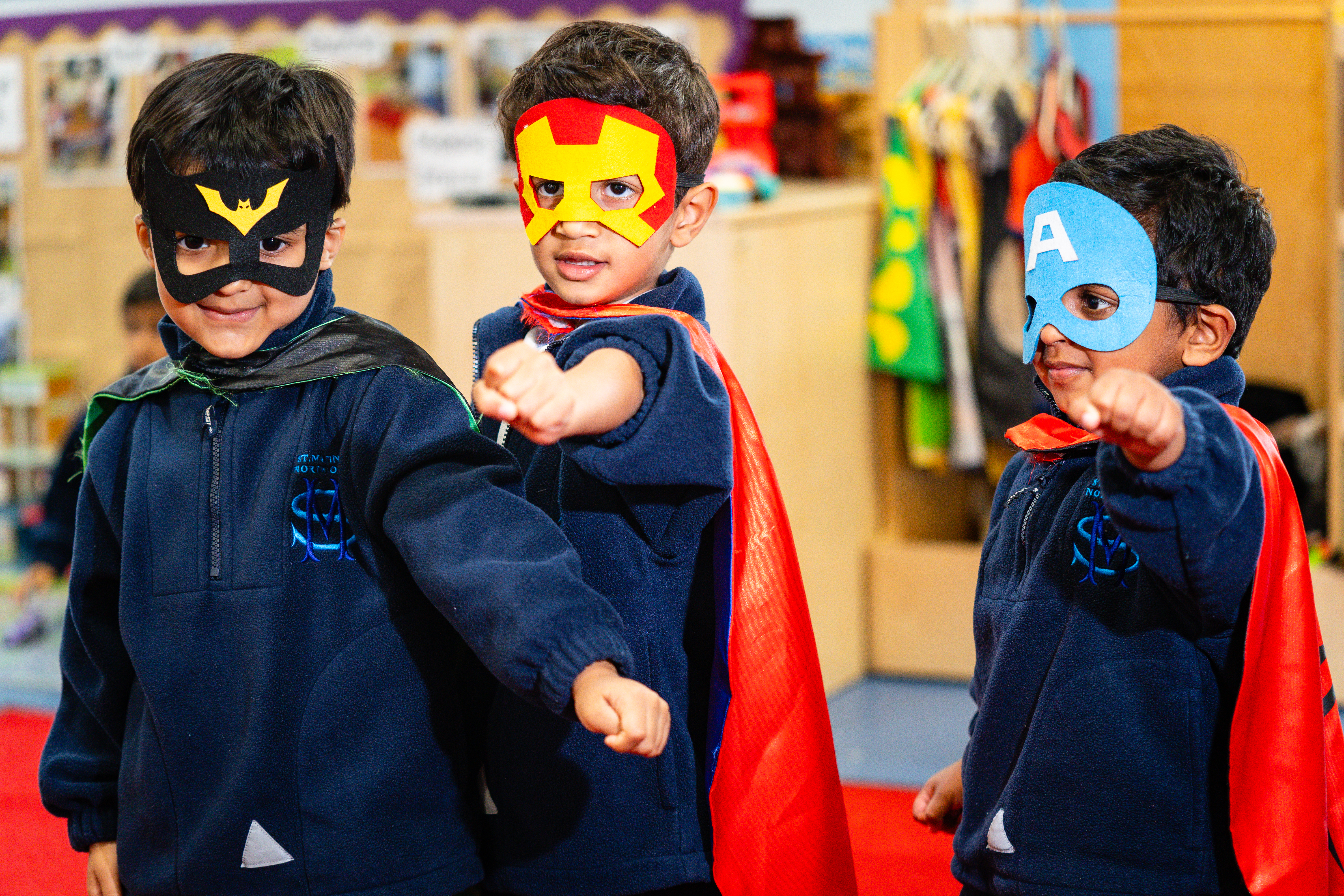
When we encourage children to play together, they learn how to share, take turns and communicate clearly. Cooperative play helps them practise listening and responding to others, which builds empathy and patience. It also gives them the chance to solve small problems as a group.
Through imaginative play, children explore different roles and perspectives. Acting out real-life or fantasy situations allows them to understand emotions and relationships better. This type of play develops both confidence and emotional awareness.
By using a play-based approach to early childhood learning at St Martin’s, we support the growth of essential emotional and social skills. Children learn to negotiate, express ideas and work as part of a team. These experiences create a strong foundation for healthy social interactions later in life.
Activities such as cooperative play and pretend play encourage children to connect with others in meaningful ways. By engaging in shared tasks, they develop trust and a sense of belonging. This helps them build positive relationships both inside and outside the classroom.
4. Develops physical coordination and fine motor skills
Physical play gives children many chances to move, stretch and test their bodies. Through activities like climbing, running and balancing, they build strength and control. Play supports coordination by helping them understand how their bodies move in a given space.
Goal-oriented play, such as obstacle courses or ball games, improves motor skills and agility. Research shows that structured play activities help children aged four-and-a-half to six develop better balance, movement control and gross motor skills. These abilities form the foundation for later physical activities and sports.
Fine motor skills also grow through play that involves small hand movements. When children engage in sensory play and draw, build with blocks or use playdough, they strengthen the muscles in their hands and fingers. These actions prepare them for writing and other daily tasks that require precision.
As children practise and master new movements, they gain the ability to engage in more active play. This development encourages a lifelong interest in physical activity and healthy movement habits from early childhood.
5. Supports emotional wellbeing by allowing self-expression and stress relief
When children play, they express feelings and ideas that they may not yet have words for. Through creative and imaginative play, they learn to manage emotions and develop self-awareness.
Play offers a safe space for children to explore emotions such as joy, frustration or excitement. Activities that encourage creativity and movement, like drawing or pretend play, can help release tension and promote calm.
By encouraging unstructured play, we help children relax and recover from daily pressures. Studies suggest that free play combined with mindfulness can improve emotional balance and overall wellbeing.
Supporting personal, social and emotional development through play also builds resilience. When we provide time and space for open-ended activities, children gain confidence in expressing themselves. This foundation strengthens their ability to manage challenges and supports long-term emotional health.
6. Encourages creativity and innovation through open-ended activities
Unstructured play supports children’s creativity by providing open-ended activities that let them explore materials freely. These activities allow children to test ideas, take risks and find new ways to use everyday objects without fixed outcomes.
When children engage in open-ended play, such as building with loose parts or creating art from varied materials, they learn to think flexibly. This type of play helps them develop problem-solving and critical thinking skills.
We encourage innovation in our nursery at St Martin’s by offering materials that have multiple uses, like blocks, fabric or natural items. Open-ended play gives children the freedom to make choices and express ideas in their own way.
7. Builds confidence and independence in learning environments
When we give children the freedom to explore through play, they learn to trust their own ideas and decisions. This sense of control helps them build confidence in what they can do. They start to see mistakes as part of learning, not as failures.
In a play-based setting, we guide children to make choices about materials, roles or activities. This encourages independence and problem-solving. It also helps them develop persistence when tasks become challenging.
Play-based learning supports emotional growth by allowing children to take small risks in a safe space. When they succeed, even in small ways, they gain pride in their achievements.
Creating environments that support child-led play helps us nurture self-motivated learners. Importantly, balancing structured activities with free play ensures children develop both confidence and independence in their approach to learning.
8. Aligns with the early years foundation stage (EYFS) framework
Play-based learning supports the goals of the early years foundation stage (EYFS) statutory framework, which sets standards for the learning, development and care of children from birth to five. It discusses creating environments where children can explore, experiment and build essential early skills through play. Our early education settings at St Martin’s are informed both by the early years framework and our in-house child development experts to offer the best possible early years education.
The EYFS recognises play as a key way children learn and develop. When we plan activities that allow children to investigate and make choices, we help them meet the framework’s seven areas of learning and development. These include communication, physical development and understanding the world.
By using a play-based approach, we align our teaching with the EYFS principles of active learning and exploration. Our role as educators is to balance structured guidance with child-led play. This approach means we meet and even exceed EYFS expectations while supporting each child’s curiosity, confidence and independence in a safe, engaging setting.
9. Supports relationship building and teamwork
Children learn how to share ideas, take turns and listen to one another through play activities. These small interactions help them build trust and form friendships that support social growth.
Through cooperative play, children begin to work towards shared goals. This type of play encourages teamwork and problem-solving as they learn to manage different opinions and find solutions together.
Early years practitioners play a key role in this process. By creating inclusive play environments and modelling positive behaviour, we help children practise empathy and cooperation. They learn that working together can be both enjoyable and rewarding, building confidence in group settings.
Structured play activities, such as group games or building projects, also strengthen communication and understanding. These experiences teach children how to express their thoughts clearly and respect the perspectives of others, important skills for future learning and social life.
Frequently asked questions
Play-based learning helps children think, communicate and interact more effectively. It builds cognitive, social, emotional and physical skills through active exploration and meaningful interaction with others.
What are the key benefits of play-based learning for young children?
Children strengthen their thinking and problem-solving skills through hands-on play. Activities that involve building, sorting or role-playing support fine motor development and creativity. Play-based learning nurtures curiosity and a lasting interest in learning.
How does play-based learning support cognitive development in early childhood?
When children experiment with materials, make choices and test ideas, they develop reasoning and memory. Play encourages them to plan, predict outcomes and adapt when things change. Both solitary and social play combine thinking and physical activity, which helps strengthen cognitive growth.
What is the role of the adult in facilitating play-based learning experiences?
Parents’ and educators’ role involves observing, guiding and extending children’s play without taking control. We can ask open-ended questions that prompt deeper thinking and introduce new vocabulary to support language growth. Adults act as facilitators who create a supportive environment for discovery.
How does play-based learning influence social and emotional development in children?
Cooperative play helps children learn to share, negotiate and work towards common goals. Through imaginative play, they practise empathy and manage emotions in safe settings. Collaborative play builds teamwork and problem-solving skills essential for social growth.